






For Australian beginners, player safety is less about slogans and more about practical risk control. With offshore casinos, the main questions are simple: can you access your account when a mirror changes, can you verify your identity without endless loops, and can you get your money out without losing a chunk of it to fees or delays? Fairgo sits in the grey-market category for AU players, so the right way to assess it is not by the homepage mood, but by the rules behind the cashier, the bonus terms, and the complaints pattern that usually shows up when real withdrawals begin.
This guide focuses on the parts that matter most for safety: legal context, payment friction, verification, bonus traps, and when a site becomes more trouble than it is worth. If you want the brand page itself, learn more at https://fairgowin-au.com. The goal here is not to sell the experience, but to show where beginners usually underestimate risk and how to make a calmer decision before putting any AUD on the line.



What Fairgo means for AU players
In Australia, online casino play sits in a restricted legal environment. That does not mean every player is treated the same as an operator, but it does mean the safety net is thin. Fairgo is best understood as an offshore casino that remains accessible to Australian punters while operating outside the local casino framework. In practice, that creates a different set of risks from a licensed domestic service: fewer formal dispute options, more dependence on the operator’s own policies, and a greater chance that domains, payment routes, or support pages change without much warning.
For beginners, the main mistake is assuming that “working today” means “stable tomorrow.” Mirror domains can move, validators can disappear, and access can change if a block lands or a URL shifts. That is not automatically proof of fraud, but it is a real operational risk. If your play style depends on predictable access and fast withdrawals, you should treat that instability as part of the cost of using an offshore casino.
Safety checklist: what to inspect before depositing
The simplest way to judge player safety is to use a checklist rather than a vibe check. The table below turns the most important risk points into a quick review tool.
| Check | What to look for | Why it matters |
|---|---|---|
| Licence visibility | Clear licence details, but be cautious if the validator link is missing or broken | If the seal cannot be checked, you have less independent proof of oversight |
| Domain stability | Whether the site changes mirror URLs or uses multiple lookalike domains | Frequent domain changes can interrupt access and complicate support or login |
| Withdrawal rules | Minimum cashout, fees, pending time, and method limits | Small wins can be eaten by fees or blocked by high minimums |
| KYC process | Document list, turnaround expectations, and rejection reasons | Many disputes begin when identity checks drag on or documents are refused for minor issues |
| Bonus terms | Max bet rules, excluded games, and wagering formula | Bonus winnings can be voided if you break hidden conditions |
| Self-control tools | Deposit limits, timeout options, and self-exclusion language | Responsible gambling depends on tools actually being usable, not just listed |
Where the real risks usually sit
Based on the available, the biggest issues are not about game fairness in the abstract. They are about friction. Community complaint data points to stalled withdrawals and repeated KYC loops as the most common pain point. That does not mean every player has trouble, but it does mean beginners should expect friction as part of the normal experience rather than as an exception.
A few risks deserve special attention:
1) Dynamic domain mirroring. If a casino rotates URLs often, you may lose access suddenly or struggle to find the correct support page. That can delay account checks, payments, and even simple login recovery. For a beginner, the key risk is not just inconvenience; it is losing track of which domain is legitimate.
2) Vague irregular-play clauses. These are the sort of terms that can be used to challenge bonus winnings or investigate play patterns after the fact. The issue is not that every clause is automatically abusive, but that broad wording gives the operator more room to dispute a withdrawal.
3) Pending periods. A 48-72 hour pending window means a withdrawal can still be reversed before approval. For responsible gambling, that is a red flag because it makes impulse reversal easier. For practical money management, it also means your funds are not really “on the way” until the request passes that stage.
4) High withdrawal thresholds and fees. When the minimum cashout is high relative to your balance, or when fees are added to bank transfers, a modest win can shrink fast. Beginners often focus on how easy a deposit is and ignore how expensive the exit is.
Payments, verification, and why small wins can be awkward
For AU players, payments are often the first point where offshore casino reality shows up. Neosurf and crypto are usually the smoother paths in this environment, while Visa or Mastercard deposits can be less reliable because some banks block gambling transactions or apply stricter controls. That is not unique to Fairgo, but it does shape the experience.
Withdrawal method matters even more than deposit method. indicate a minimum withdrawal of A$100 for Bitcoin and bank wire, with bank wire also carrying a A$50 fee. That is a big deal if you are playing at lower stakes. A small profit can become poor value once processing costs are counted.
Here is the practical pattern beginners miss:
- If you deposit a small amount and win a modest amount, you may not meet the withdrawal floor.
- If you use bank wire, the fee can reduce the value of the cashout sharply.
- If verification is delayed, the withdrawal clock does not help you.
- If your documents are rejected for tiny issues, the request can sit in limbo longer than expected.
That is why safety analysis is really money-management analysis. A casino can be “working” while still being poor value for a small balance.
Bonus terms: the place beginners lose control
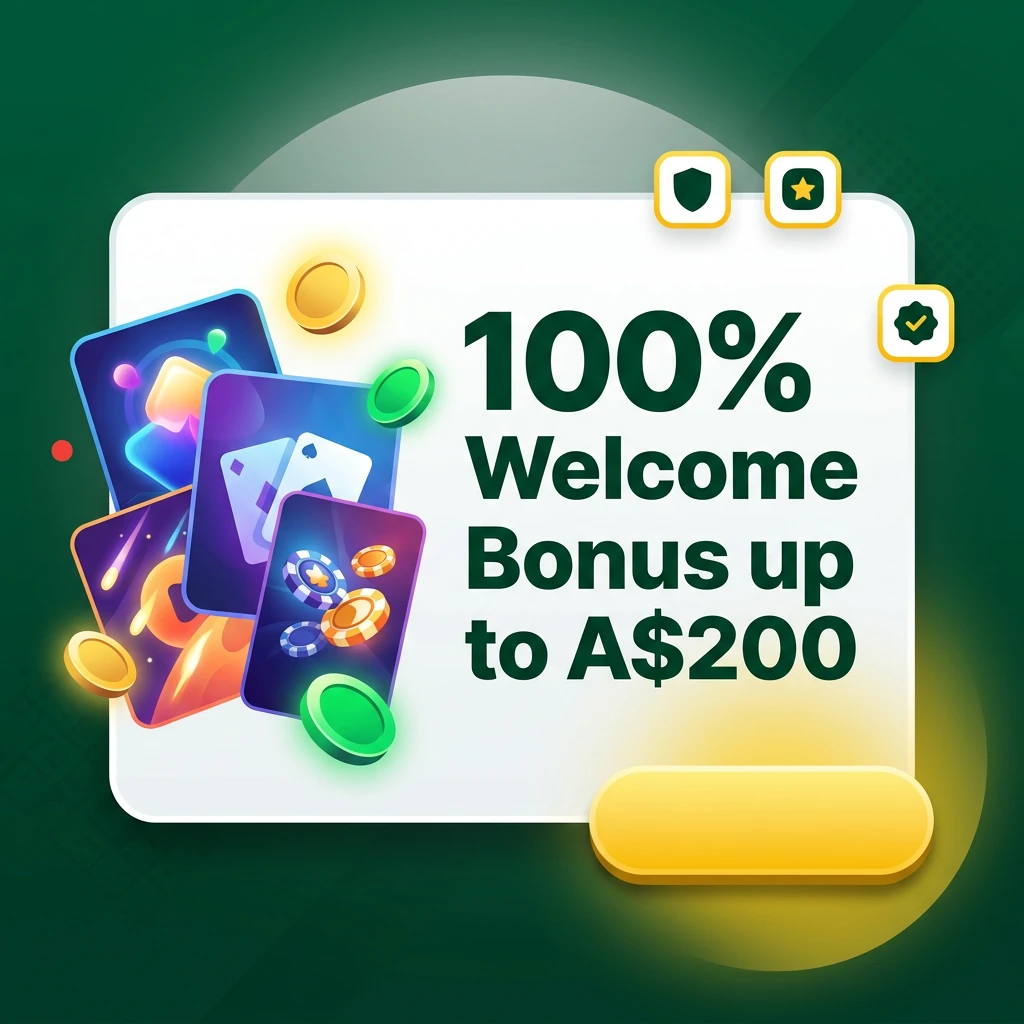
Bonuses are often presented as upside, but in risk terms they are a contract with conditions. The standard welcome structure described in the available facts is a 100% bonus up to A$200 with 30x wagering on deposit plus bonus. On paper that sounds straightforward. In practice, the rules are where new players get caught.
The strictest issue is the A$10 max bet rule while a bonus is active. Exceed it, and winnings can be voided. That is easy to miss if you are playing quickly, using auto-spin, or moving between game types without checking the bonus state. There are also excluded games, especially table titles such as roulette, baccarat, craps, pontoon, and Sic Bo. If you do not read the list carefully, you can accidentally make the bonus worthless.
For a beginner, the important question is not “Is the bonus big?” It is “Can I realistically clear it without stepping on a rule?” In many cases the answer may be no. That is especially true if you prefer higher stakes, mixed games, or short sessions.
Responsible gambling habits that actually help
Responsible gambling is most useful when it is concrete. A few habits are more effective than broad promises to “play carefully.”
- Set a hard deposit cap before your session starts.
- Decide your exit point for both wins and losses.
- Avoid bonus play if you do not want extra terms restricting your bets.
- Keep copies of chats, emails, and screenshots for every withdrawal request.
- Use a separate payment method so gambling spend is easy to track.
- Stop when play feels forced, especially after chasing losses.
For Australians, the legal age is 18+, and support resources are available if gambling starts to feel less like entertainment and more like pressure. Gambling Help Online provides national support, and self-exclusion tools should be used early rather than late. If a site’s own timeout or exclusion tools are clumsy, that itself is useful information about the quality of its player protection.
When Fairgo may be a poor fit
Fairgo may be a poor fit if you want tightly regulated protections, very fast cashouts, or low-friction complaint handling. It may also be a poor fit if you usually play small balances, because the withdrawal thresholds and fees can take too much off the top. The more you value certainty, the less appealing an offshore grey-market model usually becomes.
Another warning sign is emotional play. If you find yourself chasing losses, increasing stakes after a delay, or re-depositing because a cashout is pending, the structure of a casino like this can amplify the problem. A pending withdrawal can feel like a temporary pause, but psychologically it can encourage more play rather than less.
That is why the safest approach is to treat every deposit as discretionary spend, not as money you expect to recover. Once that mindset is gone, the casino’s structural risks matter far less than your own decision quality.
Mini-FAQ
Is Fairgo regulated in Australia?
No. It operates offshore and sits outside the domestic casino framework. That means Australian players do not get the same local regulatory protection they would with regulated sports betting services.
What is the biggest safety risk for beginners?
The biggest risks are withdrawal friction, bonus rule traps, and domain instability. Beginners often focus on the deposit and ignore the harder part: getting money back out.
Are crypto withdrawals automatically safer?
Not automatically. Crypto can be faster and more reliable for offshore play, but it still depends on the casino approving the cashout and on you using the correct wallet and network.
Should I take the welcome bonus?
Only if you understand the wagering, max bet, and game restrictions. For many beginners, cash play is simpler and less risky than trying to clear a bonus.
About the Author
Zara Price is a gambling writer focused on player protection, payment risk, and practical casino analysis for Australian readers. Her work aims to make small-print rules easier to understand for beginners.
Sources: provided for this article, including licence and operator notes, community complaint patterns, withdrawal and payment thresholds, bonus rule analysis, and Australian responsible gambling framework references.